Blog

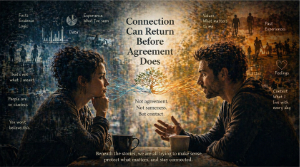
We explore what makes connection possible again even when agreement feels out of reach. It shows how the absolute certainty of our conclusions softens once we recognize our sense-making process as a limited mapping tool rather than the whole of who we are. The invitation is to step into the pause beneath our clashing stories and reconnect with the shared, living motivations — the ache to belong, protect, and matter — driving the person across from us.

We learn to see systems as things “out there” — diagrams to map, problems to fix. But the distance is the illusion. Life is the one system, and we are inside it. The moment we stop trying to control the blueprint and start sensing the living structure beneath it, something shifts. What happens when we stop analyzing the system — and remember that we are it?
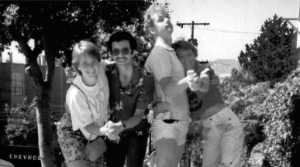
We grow up believing individuality means standing apart — becoming someone through separation, self-reliance, and the story of being “self-made.” But real identity doesn’t harden in isolation. It forms in the spaces between us. The more I chased independence, the more I drifted from the web that made me possible. And the moment I stopped trying to build myself alone — the moment I returned to collaboration, connection, and the quiet truths of relationship. I found a self I didn’t know I was missing. Life doesn’t create isolated beings; it creates intersections. What happens when we stop performing independence and start remembering that we become through one another?

We grow up thinking power comes from having authority — from being the one who knows, decides, directs. But real power doesn’t rise with the title. It returns with the relationship. The moment I stopped trying to lead through control and started listening, rooms opened, trust formed, and influence became shared. Power in the living world isn’t dominance; it’s resonance. What happens when we stop performing leadership and start practicing connection?

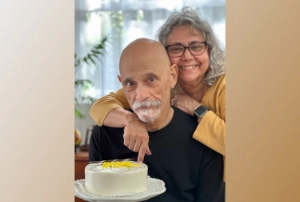
We’ve been taught to see ownership as possession — a claim, a right, a wall around what’s “ours.” But life doesn’t work that way. We don’t belong through what we hold; we belong through what we’re connected to. Standing in front of my childhood home, I was reminded that relationship, not possession, is what makes something matter. Ownership in the living world is not control, but resonance — not exclusivity, but contribution. What happens when we stop defining ownership as having, and begin seeing it as the way we participate in the world we help create?
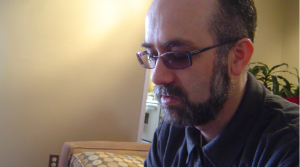
Part 3.2 of the Serving Life series examines the subtle architecture of control we refer to as governance. In this essay, José Leal asks what happens when governing becomes a way of managing people rather than serving life. From corporate boardrooms to public institutions, he traces how force — social, structural, and emotional — replaces trust and participation. Through the Life Lens, governance becomes something different: a living system of feedback, coordination, and care. It is not about control, but about how life organizes itself through relationship.
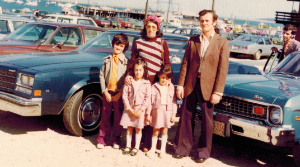
Part three of the Serving Life series begins to unmask the symbolic structures that govern our lives. This essay looks closely at the job — not just as employment, but as permission, discipline, and survival. From childhood cleaning offices to the executive suite, José Leal traces how jobs shape identity, compliance, and care itself. Through the Life Lens, contribution is no longer conditional. The future of work is not the absence of jobs, but the presence of shared purpose — a shift from employment to collaborative impact.