Blog

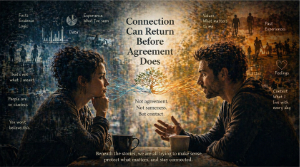
We explore what makes connection possible again even when agreement feels out of reach. It shows how the absolute certainty of our conclusions softens once we recognize our sense-making process as a limited mapping tool rather than the whole of who we are. The invitation is to step into the pause beneath our clashing stories and reconnect with the shared, living motivations — the ache to belong, protect, and matter — driving the person across from us.

Money began as a way to coordinate life, yet it has become the story that defines it. This essay traces how symbols meant to serve life came to rule it — and how reconnecting our stories to life’s real flows can restore balance and meaning.
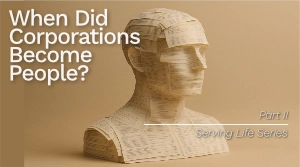
We’ve been taught to see corporations as people — rational, enduring, worthy of loyalty — even as the humans within them become replaceable. The disquiet we feel is life reminding us that no fiction can feel or care. A corporation cannot grieve, love, or breathe; it only persists. What happens when we stop serving immortal fictions and return our work to the living world they were meant to serve?
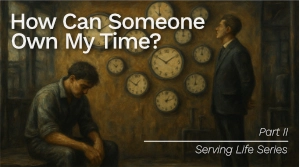
We’ve learned to sell our hours as if time were a thing we could own. But time isn’t a possession — it’s life unfolding. This essay explores how the story of “time is money” turned living rhythms into rented hours, and what it means to reclaim time as something shared, creative, and alive.
We’ve been taught to see homes as assets — investments to flip, properties to speculate on — even while families are pushed out and houses sit empty. The unease we feel is life reminding us that a home is not a balance sheet number but the ground of safety, belonging, and connection. What shifts when housing stops serving markets and starts serving life?
Part three of the Serving Life series turns outward: from life as “resource” and people as “human capital” to the living world reduced to commodities. Forests become board feet, rivers become water rights, ecosystems become “services” to be priced. This lens makes life legible to markets — but it severs our belonging, leaving us lonely and disconnected. Through the Life Lens, forests, rivers, and ecosystems return as kin: living systems we are woven into. Real change begins by flipping the frame — shifting our language, our measures, and our structures so that life, not story, is the root.

We’ve been taught to see people as “assets,” “headcount,” even “human capital.” The words sound ordinary, but they quietly reduce life to costs and outputs. Through a life lens, each person is not capital but a flow of being — alive with creativity, relationship, and contribution. Work becomes less about extracting performance and more about creating the conditions where life can flourish. What happens when we shift from managing headcount to serving human wholeness?